
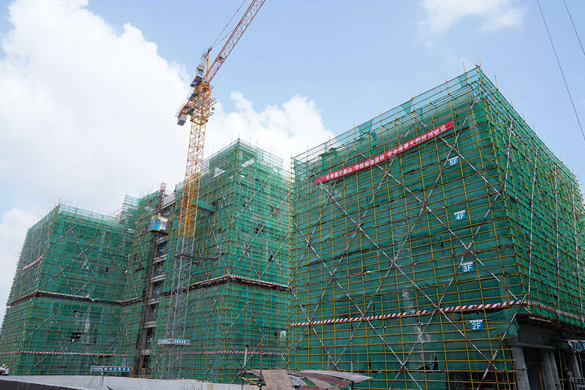
Background
The Qingdao Huangdao Sino-German Smart Construction Site Project is a pioneering initiative designed to enhance construction safety management and operational efficiency through integrated artificial intelligence technologies. Faced with common industry challenges such as fire hazards, compliance issues, and inefficient manual supervision, the project team adopted an AI Algorithm Box to achieve a new level of intelligent site management.
Project Objectives
The core objectives of this project include:
Fire & Smoke Detection
Rapid and accurate identification of potential fire risks on site.
Helmet Detection
Ensuring that all personnel comply with mandatory helmet requirements.
Reflective Vest Detection
Monitoring whether workers are equipped with approved reflective safety vests.
Face Recognition
Managing site access control and attendance through smart identity verification.
Technical Implementation
Fire & Smoke Detection
The AI Algorithm Box analyzes live video feeds from surveillance cameras to detect fire or smoke in real time, enabling early warning and swift response to potential hazards.
Helmet Detection
Using advanced image recognition, the system automatically checks if workers are wearing safety helmets, reducing risk and increasing compliance.
Reflective Vest Detection
Through intelligent video analysis, the system confirms that all personnel on site are wearing reflective vests, significantly improving visibility and nighttime safety.
Face Recognition
Integrated face recognition technology manages entry/exit permissions and attendance, streamlining workforce supervision and improving personnel management.
Implementation Steps
1. Technology Deployment
High-definition cameras were installed in critical areas across the site and connected to the AI Algorithm Box.
2. System Integration
AI modules were seamlessly integrated with the existing safety and administrative systems to enable centralized monitoring, data sharing, and rapid incident response.
3. Continuous Optimization
Algorithms and system configurations were continuously adjusted based on onsite performance to enhance detection accuracy and operational efficiency.
Expected Outcomes
-
Significantly enhanced safety management, enabling proactive identification and mitigation of safety risks.
-
Improved operational efficiency by reducing manual oversight and minimizing human error.
-
Optimized workforce management through intelligent access control and automated attendance tracking.
Conclusion
By implementing the AI Algorithm Box, the Qingdao Huangdao Sino-German Smart Construction Site Project has set a new benchmark for intelligent construction management. This successful deployment demonstrates how AI-driven safety solutions can transform traditional construction sites into smarter, safer, and more efficient working environments.